

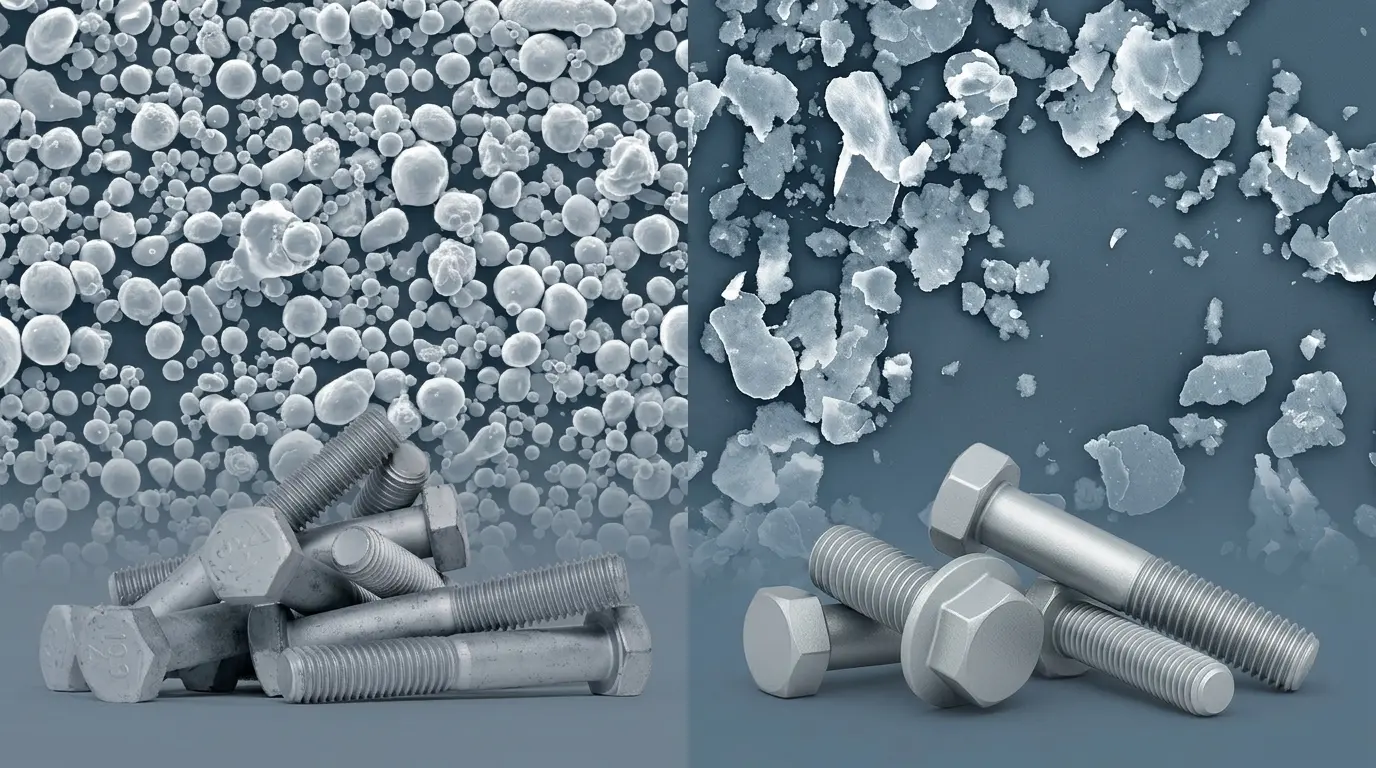
A technical guide to alkyd-based, single-pack epoxy, two-pack epoxy, air-drying and oven-cured zinc protective coatings.
Steel corrosion remains one of the most significant challenges facing construction, infrastructure, automotive manufacturing, marine engineering and industrial maintenance. Although several protective coating technologies are available, zinc-rich paints continue to play an important role because they offer something beyond conventional barrier protection: the ability to provide sacrificial corrosion protection to steel.
However, not all zinc-rich paints are created equal.
A traditional alkyd-based zinc paint, a single-component epoxy coating, a two-component epoxy zinc-rich primer and a modern zinc-flake coating may all contain metallic zinc, but their formulation chemistry, curing mechanisms, coating thickness and long-term performance can differ considerably.
More importantly, technological developments in zinc-flake pigments, binder chemistry and additives have made it possible to develop high-performance protective coatings at substantially lower dry film thicknesses than many traditional zinc-rich paint systems.
1. Why is zinc so important in protective paints?
Zinc is an electrochemically active metal that can protect steel through a process known as cathodic or sacrificial protection.
When metallic zinc is electrically connected to steel in the presence of an electrolyte, zinc preferentially corrodes, helping to protect the underlying steel.
Zinc-rich paints generally provide protection through two complementary mechanisms.
Sacrificial Protection
Metallic zinc particles form an electrically connected network within the coating and establish contact with the steel substrate. Zinc acts as the sacrificial anode.
Barrier Protection
The binder restricts the penetration of moisture, oxygen and corrosive salts. Over time, zinc corrosion products can also help seal pores and slow further corrosion.
A paint containing metallic zinc is not automatically an effective sacrificial coating. Particle contact, zinc concentration, binder distribution and surface preparation all influence performance.
2. The role of zinc dust versus zinc flake
One of the most important decisions in zinc-rich paint formulation is the selection of the metallic pigment.
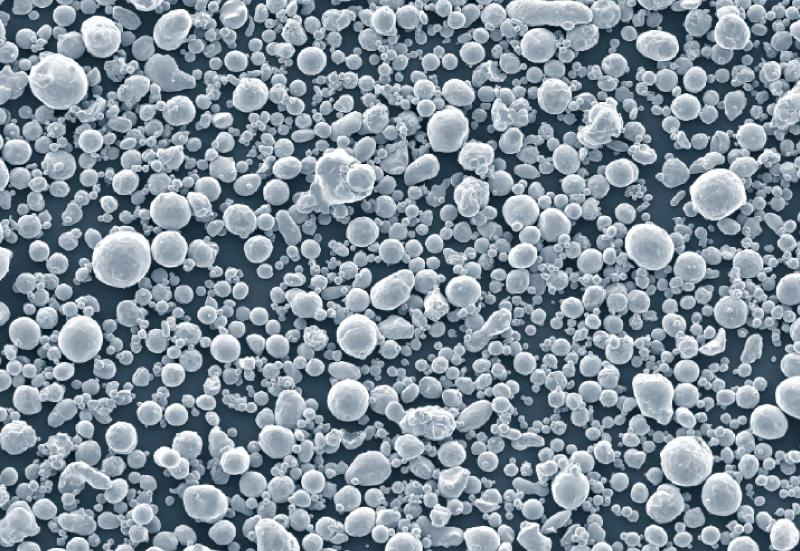
Zinc dust: The foundation of traditional zinc-rich paints
Zinc dust is widely used in conventional alkyd, epoxy and inorganic zinc-rich primers.
Its performance is influenced by several parameters:
- Metallic zinc purity and oxidation level
- Particle size and particle-size distribution
- Particle morphology
- Electrical contact between particles
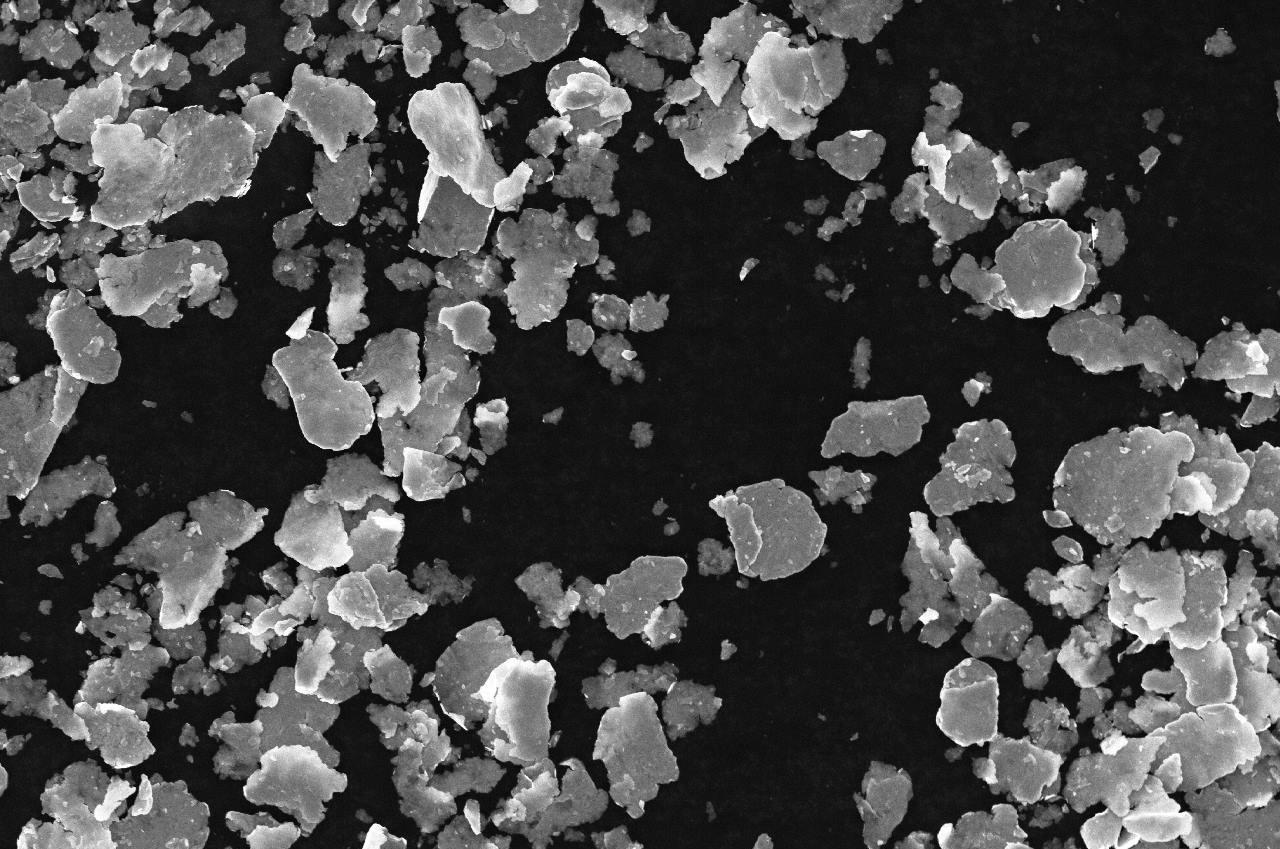
Zinc flake: A different approach to corrosion protection
Zinc flakes are thin, plate-like particles rather than predominantly spherical particles.
Their geometry enables the flakes to overlap and form a layered protective structure.
3. Comparing alkyd, single-pack epoxy and two-pack epoxy zinc-rich paints
Traditional and modern zinc-rich coatings can be differentiated according to the binder and curing mechanism.
| Coating technology | Drying or curing mechanism | Key advantages | Main limitations |
|---|---|---|---|
| Alkyd-based zinc paint | Solvent evaporation and oxidative curing | Economical, brushable, convenient for maintenance | Slower through-cure; limited resistance in aggressive chemical environments |
| Coating technology | Drying or curing mechanism | Key advantages | Main limitations |
|---|---|---|---|
| Single-pack epoxy or epoxy-ester zinc paint | Physical drying and/or oxidative curing, depending on resin | Easy application, no mixing before use | Generally less crosslinked than conventional 2K epoxy |
| Two-pack epoxy zinc-rich paint | Chemical reaction between epoxy resin and hardener | Strong adhesion, toughness and chemical resistance | Limited pot life, correct mixing and curing conditions essential |
| Inorganic zinc-rich coating | Silicate-based chemical curing | High zinc loading and robust protection when correctly applied | Surface preparation and curing conditions can be demanding |
| Thin-film zinc-flake coating | Ambient cure or thermal cure, depending on binder system | Low film thickness, good coverage of small components | Requires carefully controlled pigment orientation and application |
Alkyd-based zinc-rich paints
Alkyd coatings remain relevant for steel maintenance, fabrication and general-purpose applications.
They are generally economical and straightforward to apply using brushes, rollers or spray equipment.
However, when formulating a highly zinc-loaded alkyd paint, the formulator must balance zinc concentration against binder availability, film integrity, oxidative curing and long-term adhesion.
Excessively high metallic pigment loading may produce a porous or mechanically weak film, while excessive binder may isolate zinc particles and reduce galvanic efficiency.
Alkyd zinc-rich paints are consequently useful for appropriate maintenance conditions but are not necessarily the best choice for severe industrial or immersed service.
Air-drying, single-pack epoxy-based zinc paints
Single-pack epoxy-based systems offer a practical alternative where mixing two components is undesirable.
It is important to distinguish epoxy esters, epoxy-modified resins and physically drying epoxy formulations from genuine chemically crosslinked two-pack epoxies.
A one-pack product that becomes dry through solvent evaporation should not be assumed to have the same chemical resistance as a properly cured two-pack epoxy.
These coatings are attractive for maintenance paints, aerosol zinc coatings, workshop repairs and other applications where convenience and application speed matter.
Two-pack epoxy zinc-rich primers
Two-component epoxy zinc-rich coatings are widely used in heavy-duty industrial corrosion protection.
The epoxy resin reacts with a suitable curing agent, producing a crosslinked protective film.
When correctly formulated, such systems combine the galvanic protection of metallic zinc with the adhesion, mechanical durability and chemical resistance of epoxy chemistry.
They are especially relevant for structural steel, industrial plants, pipelines and multi-coat systems used in demanding environments.
The key formulation challenge is maintaining sufficient zinc connectivity without compromising resin crosslinking, mechanical properties or application performance.
4. The next generation: High-performance zinc-flake coatings at low film thickness
Perhaps the most exciting development in Zinc protective coating technology is the ability to achieve substantial corrosion protection using increasingly thin films.
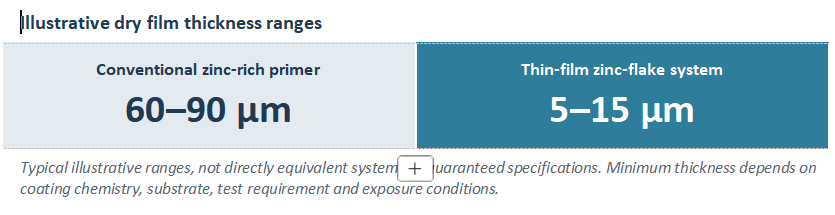
Traditional zinc-rich paint primers are often applied at approximately 60–90 microns dry film thickness, depending on the specification and exposure environment.
In contrast, engineered zinc-flake coating systems are frequently designed for considerably thinner films.
Why thinner coatings matter
Lower coating thickness can deliver significant benefits where dimensional accuracy, material consumption and production efficiency are important.
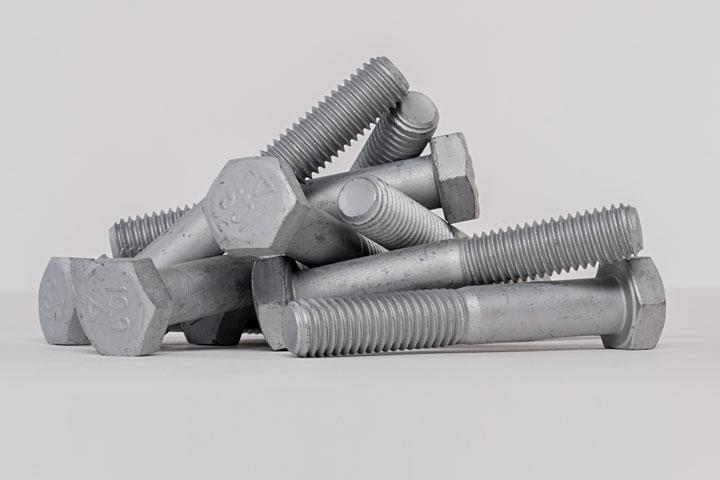
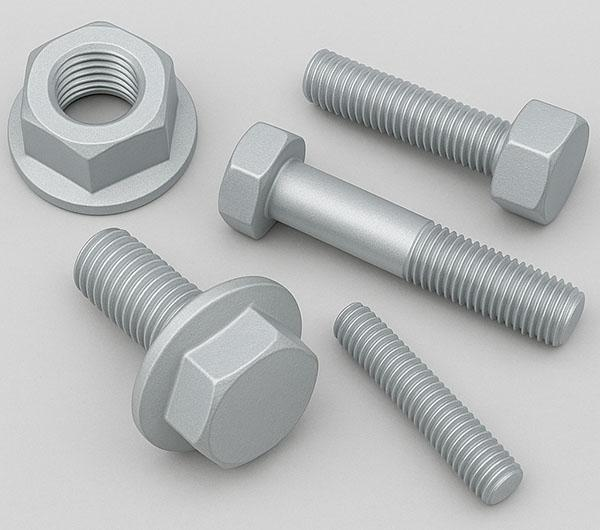
These benefits include improved dimensional control on fasteners and threaded components, less risk of excessive coating build-up, pretreatment chemicals, reduced coating mass per unit area and the possibility of efficient dip-spin or spray application.
7. Which coating is best for which application?
| Application | Coating technology worth considering |
|---|---|
| General-purpose steel maintenance | Alkyd or one-pack zinc-rich coatings |
| Aerosol zinc touch-up and repairs | Suitable single-pack zinc-rich system |
| Heavy-duty structural steel | Two-pack epoxy zinc-rich primer |
| Industrial multi-coat systems | Two-pack epoxy or specified inorganic zinc primer |
| Automotive bolts and fasteners | Engineered thin-film zinc-flake system |
| Precision threaded components | Low-thickness zinc-flake system |
| Large structures without curing ovens | Ambient-cured zinc-rich coating system |
| High-volume manufactured components | Oven-cured zinc-flake system |
The final selection depends on the service environment, substrate preparation, required coating life, dimensional tolerance, and relevant specifications.
8. How should zinc-rich and zinc-flake paints be tested?
Coating development should evaluate both corrosion resistance and mechanical performance using the intended substrate, surface preparation, application method, and cure conditions.
Important testing parameters include:
Dry film thickness
ISO 2808
Neutral salt spray testing
ISO 9227 or ASTM B117
Cross-cut adhesion
ISO 2409, where applicable
Pull-off adhesion
ISO 4624 or ASTM D4541
Impact resistance
ISO 6272, where appropriate
Humidity resistance
ISO 6270 series
Cyclic corrosion testing
According to the relevant product or industry specification
For fasteners, coating compatibility with thread tolerances, friction coefficients, and tightening performance may also be necessary.
Important Note:
It is equally important to understand that 500, 750, or 1,000 hours of neutral salt spray resistance do not directly translate into an equivalent number of years of outdoor service.
Note:
Salt-spray performance is useful for controlled comparative testing, but real-life durability depends on the environment and the complete protective coating system.
9. Industry standards and the future of zinc-based protective coatings
Several standards help define the performance and use of zinc-rich and zinc-flake coating technologies.
| Standard | Relevance |
|---|---|
| ISO 12944 series | Corrosion protection of steel structures using protective paint coating systems |
| ISO 10683:2018 | Non-electrolytically applied zinc-flake coating systems for fasteners |
| ASTM D520-25 | Specification for zinc dust pigment |
| ISO 3549 | Zinc dust pigments for paints |
| ISO 9227 | Corrosion testing artificial atmospheres using salt spray |


