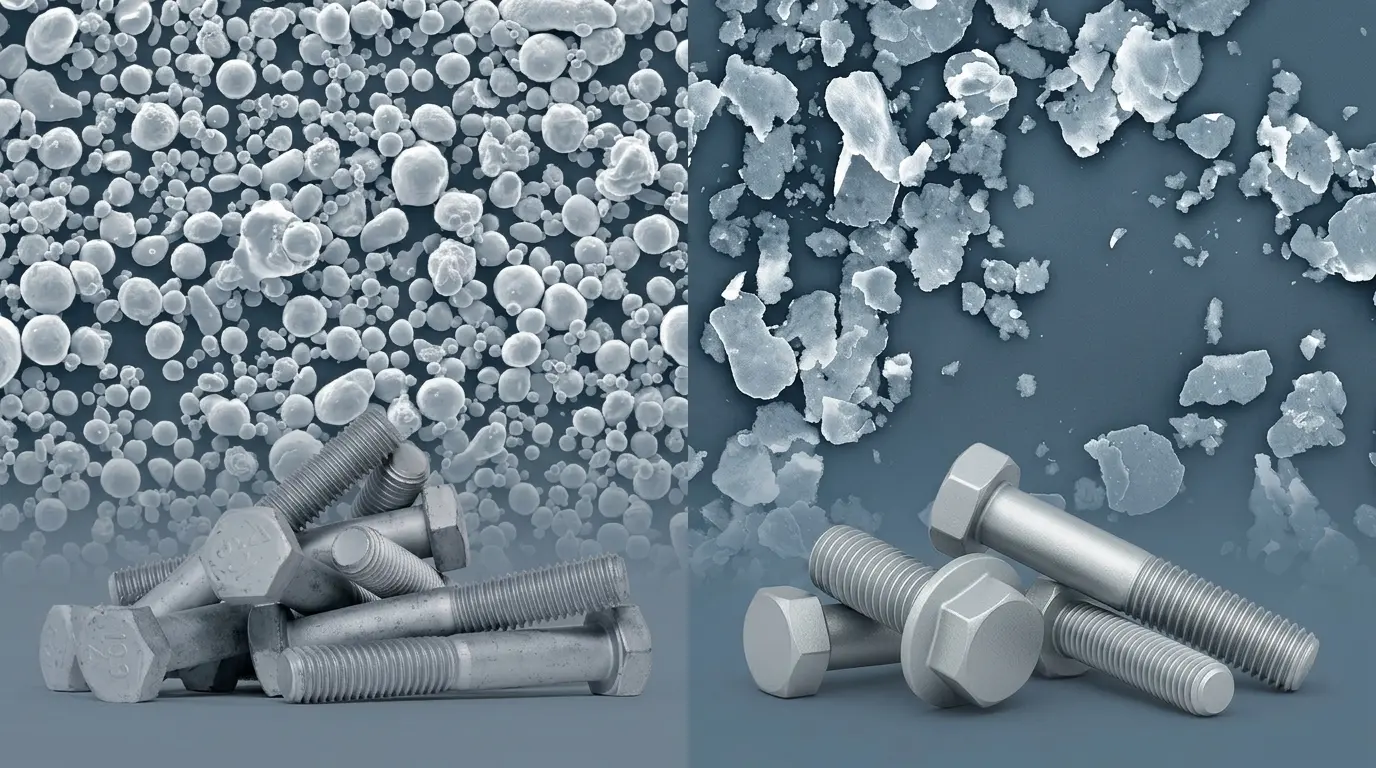

Why Wetting & Dispersion (WD) and True Formulation Chemistry Separate a Rust Preventive from a Simple Kerosene-and-Oil Blend
| “Does this product look the same?” vs. “Does this product deliver the same level of corrosion protection?” |
In industrial and everyday applications, a common misconception is that a simple mixture of kerosene and oil is enough to provide effective rust protection.
It may look like a properly formulated product. It may spread well, penetrate easily and leave an oily film. But appearance is not performance.
A properly formulated rust preventive combines Wetting & Dispersion (WD) chemistry, moisture displacement, corrosion inhibitors and a protective oil film — all working together to protect the metal.
Why Wetting & Dispersion (WD) Matter
After cleaning, machining, plating, washing, or simply exposure to humidity, a microscopic layer of moisture can remain on a metal surface. Simply covering this moisture with oil does not necessarily prevent corrosion. For effective protection, the formulation must reach the metal surface, deal with trapped moisture and establish a protective barrier.
A properly formulated product is designed to follow a deliberate sequence:
Effective Wetting & Dispersion (WD) helps the product spread across and establish contact with the metal surface. Good wetting also helps the formulation reach small gaps, threads, crevices, joints and moving parts where moisture can remain trapped.
Moisture-displacing components help remove water from the metal interface, while corrosion inhibitors and the residual protective film provide the subsequent layers of protection.
Where Does a Proper Product Make a Difference?
This combination of penetration, moisture displacement and corrosion protection makes a properly formulated product particularly useful across these applications:
| Application | Why It Matters |
|---|---|
| Locks & locking mechanisms | Penetrates internal parts; protects against moisture and corrosion |
| Hinges & joints | Reaches pins, gaps and moving contact areas |
| Fasteners, nuts, bolts & screws | Penetrates threads and protects hard-to-reach surfaces |
| Automotive parts | Protects linkages, brackets, tools, spare parts, exposed metal |
| Oil-field equipment | Protects steel components in demanding storage/operating conditions |
| Marine parts & equipment | Critical where salt and moisture create aggressive corrosion |
| Machined components & tools | Protects freshly machined surfaces during storage & transport |
| Electroplated & fabricated parts | Temporary protection after processing, rinsing and drying |
In these applications, simply making the surface oily is not enough. The product must reach the metal, deal with trapped moisture, and provide effective corrosion protection.
Why Kerosene + Oil Is Not Enoughfv
Kerosene can be an excellent carrier, providing penetration, low viscosity and easy application. Mineral oil can leave a hydrophobic residual film. But these properties alone do not make a complete rust preventive. A complete rust preventive formulation typically combines five functional layers:
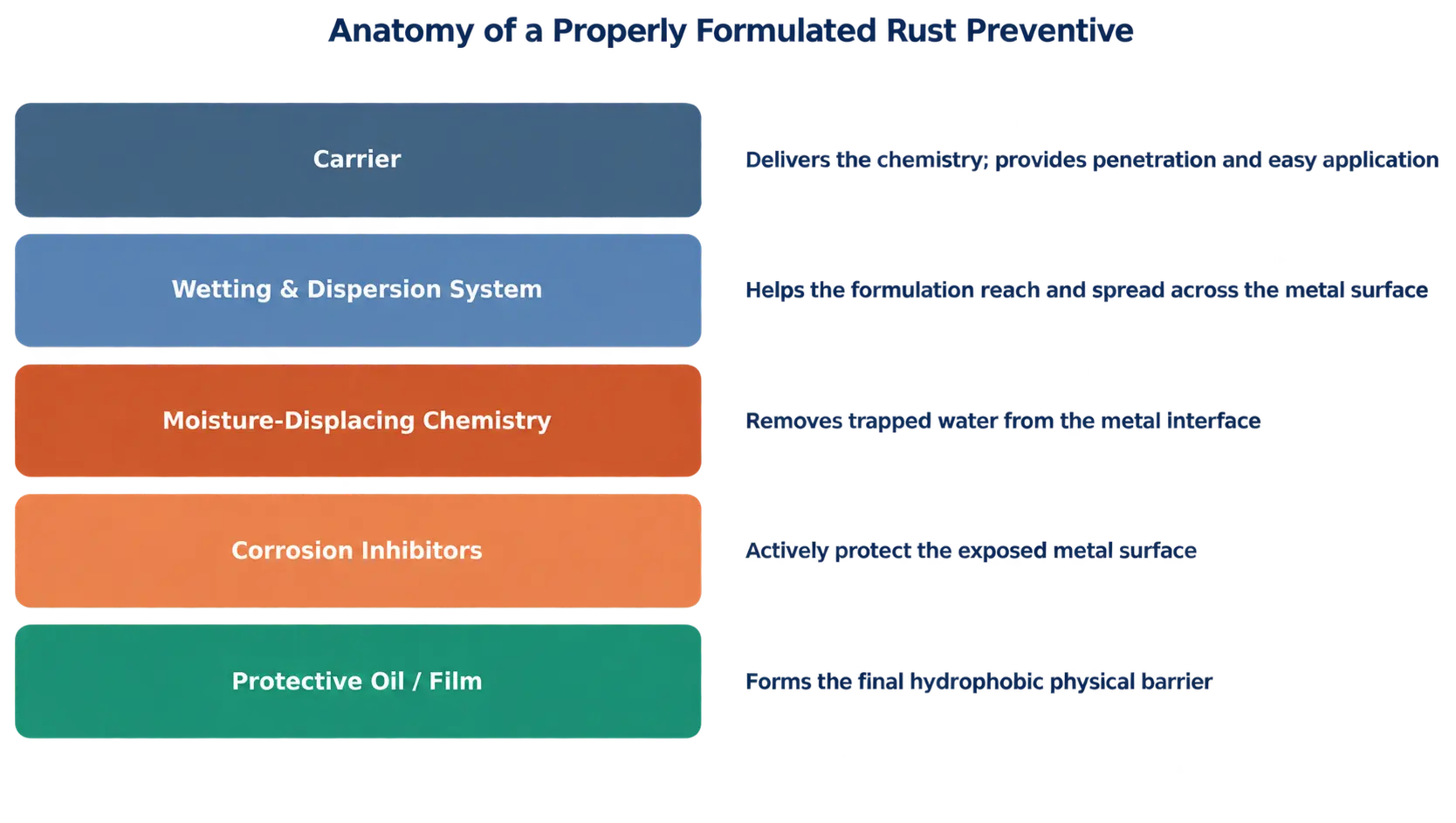
The carrier delivers the formulation and provides penetration. Wetting & Dispersion (WD) helps the chemistry spread across and establish contact with the metal surface. Moisture-displacing components help remove trapped water from the metal interface. Corrosion inhibitors provide active protection against rust, while the residual protective film forms the final physical barrier.
Performance Is What Really Matters
Two products can have similar colour, smell, viscosity, penetration, spreading and oily appearance — yet deliver completely different levels of corrosion protection. For demanding applications, properly formulated products may be designed to achieve performance targets such as:
| Performance Target | Typical Benchmark |
|---|---|
| Salt Spray Resistance | 90 – 120 Hours |
| Humidity Resistance | 500 Hours |
Kerosene vs. Formulated Product at a glance:
| Attribute | Kerosene + Oil Blend | Properly Formulated Product |
|---|---|---|
| Appearance & viscosity | Similar | Similar |
| Penetration / spreading | Good | Good |
| Wetting & dispersion chemistry | ✘ Absent | ✔ Present |
| Active moisture displacement | ✘ Not designed for it | ✔ Engineered function |
| Corrosion inhibitors | ✘ None | ✔ Present |
| Reaches metal/moisture interface | ✘ Unreliable | ✔ Reliable |
| Protection in threads, crevices, joints | ✘ Limited | ✔ Effective |
| Salt spray resistance | ✘ Undefined | ✔ 90–120 Hours (typical target) |
| Humidity resistance | ✘ Undefined | ✔ 500 Hours (typical target) |
| Resemblance does not mean equivalent chemistry — and it certainly does not mean equivalent performance. |
The real measure of a rust preventive is not how it looks in the drum it is how well it protects the metal.